Cactus Painted Rocks: A Rock Garden in a Pot
Turn three smooth stones into painted cacti with green stripes, white spines and a pink flower, then stand them in a terracotta pot of gravel.
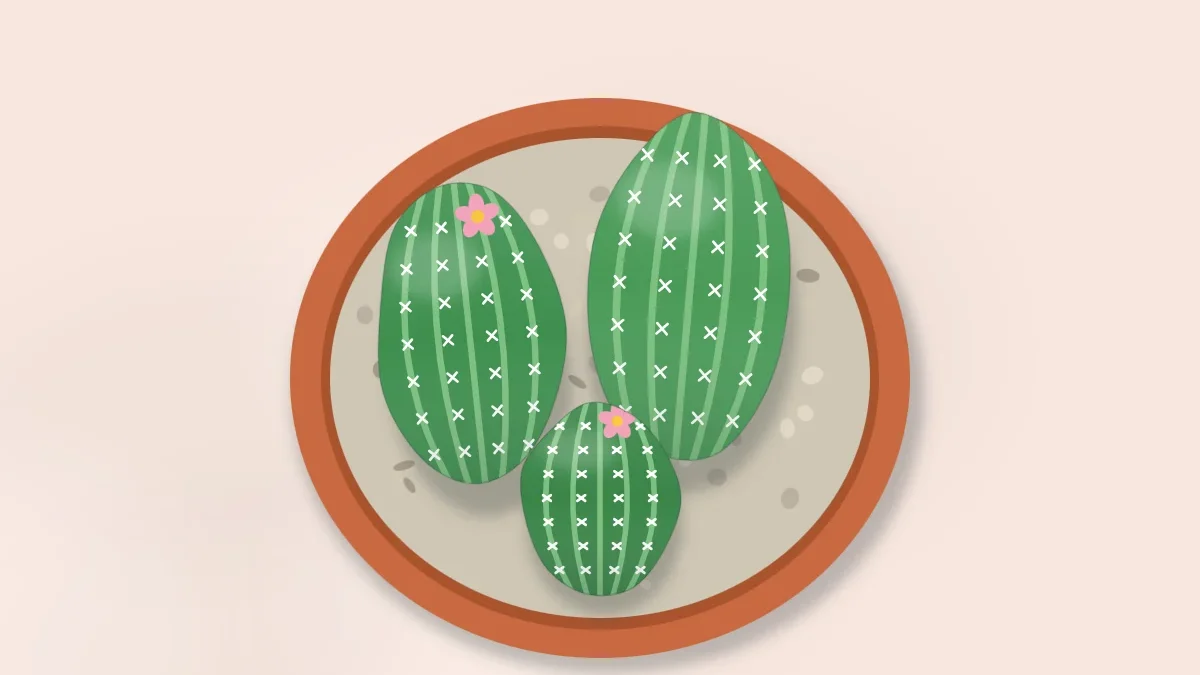
Tutorial at a glance
Materials
- Acrylic craft paint: green, lighter green (or white and yellow to mix it), white, pink, yellow
- Flat brush for the base coat
- Small round brush, about size 4
- Liner brush, fine acrylic paint pen or toothpick for spines
- Terracotta pot, about 4 to 5 in (10 to 13 cm) across
- Small gravel or pebbles
- Clear brush-on or spray sealer
Stand a few green painted stones upright in a pot of gravel and they read as cacti straight away. The shapes come from the stones themselves, so the painting is simple: a green coat, lighter stripes, white spines and one small pink flower.
The finished pot is a decoration, not a planter. It needs no water and no soil, which makes it a good first project for a shelf, a desk or a windowsill.
What you need
- Three smooth stones of different heights, roughly 2 to 4 in (5 to 10 cm) tall. Long ovals and rounded paddle shapes work best.
- Acrylic craft paint: a medium or dark green, a lighter green (or yellow and white to mix one), white and pink, with a dot of yellow for the flower center
- A flat brush for the base coat, a small round brush for stripes and a liner brush, fine acrylic paint pen or toothpick for spines
- A terracotta pot about 4 to 5 in (10 to 13 cm) across
- Small gravel or pebbles to fill the pot
- Clear brush-on or spray sealer
Choosing stones that look like cacti
Pick stones for their outline first. A tall narrow oval becomes a column cactus, a flat rounded oval becomes a paddle, and a small round stone becomes a barrel cactus. Three stones of clearly different heights make a livelier group than three of the same size.
Each stone should have one end that is a little broader or flatter, because that end goes down into the gravel. Stand each stone on the table and see whether it leans; a stone that falls over on the table will also want to tip in the pot. For more on reading shapes, see the guide to choosing rocks for painting. Rules on collecting stones differ by place and many parks do not allow it, so check locally and get permission, or buy a bag of landscaping stones.
Painting the cactus stones
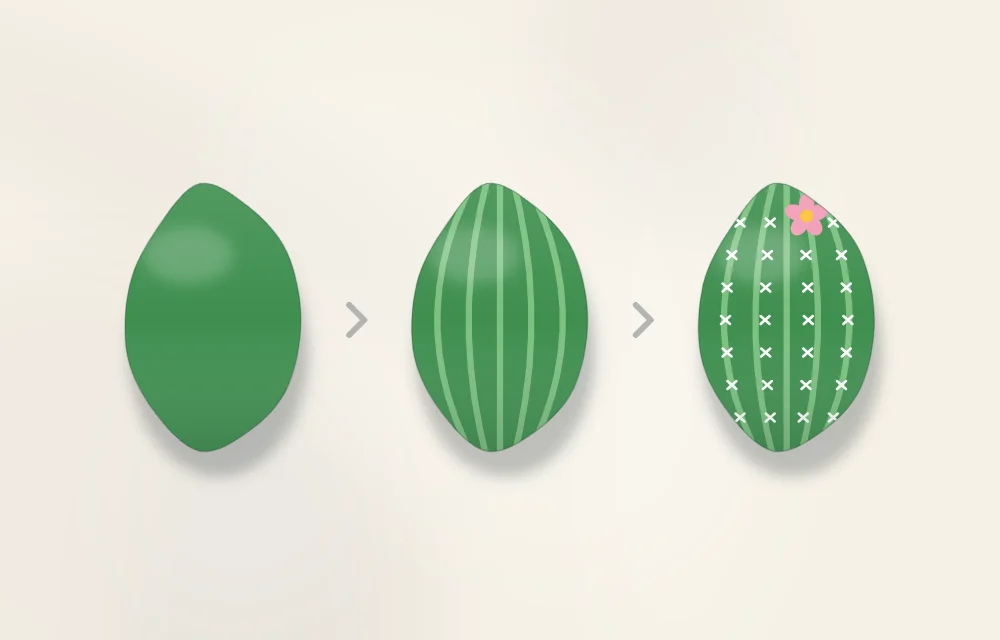
The design is built in three layers, each one drying before the next goes on: base coat, stripes, then spines and flower.
- Wash and dry the stones. Scrub off dust and grit with soapy water and let the stones dry completely. Paint lifts from a damp or dusty surface.
- Paint the green base coat. Hold the stone by its bottom end and cover the top two thirds with green using the flat brush, brushing along the length of the stone. Stand it on its base or rest it on a jar lid to dry, then paint the bottom third. Because the stones stand upright, the whole surface has to be covered, front, back and sides.
- Add a second coat. When the first coat is dry to the touch, go over it again. Green is often a little see-through, and a solid, even base is what makes the stripes look clean.
- Mix a lighter green. Add a little white and a touch of yellow to your base green on the palette. Aim for a color that is clearly lighter but still obviously green. Test a stroke on the back of a stone and adjust before you commit.
- Paint the stripes. With the small round brush, pull lines of the lighter green from the top of the stone down to the base. Start with one stripe down the center of the front, then add stripes on either side about a finger-width apart. Let the lines curve outward slightly to follow the bulge of the stone, like the ribs of a real cactus. Carry on around the back.
- Let the stripes dry fully. Spines painted onto tacky stripes will smear and turn pale green, so give this layer time.
- Add the white spines. Using a liner brush, fine paint pen or the tip of a toothpick, make small white marks along each stripe. The easiest spine is a tiny V or a short pair of dashes, spaced about half an inch (1 cm) apart. Small stars made of three crossed dashes also work. Keep them small; oversized spines make the stone look striped with white rather than prickly.
- Paint the pink flower. Choose one stone and add a flower near the top, slightly off center. Paint five short petals in pink, each one a single press of the round brush, radiating from one point. When the pink is dry, add a yellow dot in the middle. If the pink looks dull over the green, paint the petals in white first, let that dry and put the pink on top, as explained in the guide to layering paint on rocks.
- Seal the stones. Once everything is completely dry, apply a clear sealer to protect the paint from scuffs where the stones rub against the gravel. Follow the manufacturer’s instructions on the label for coats, drying time and ventilation, and have an adult handle any spray product.
Tip
Vary the three stones a little. Use wide stripes on one, narrow stripes on another and dots of lighter green instead of stripes on the third. Small differences make the group look like three different plants.
Common problems and fixes
| Problem | Likely cause | Fix |
|---|---|---|
| Stripes barely show | Lighter green is too close to the base color | Add more white and repaint over the dry stripes |
| Stripes are wobbly | Brush overloaded or pushed instead of pulled | Wipe excess paint off and pull each stroke toward you in one motion |
| Spines look gray | White paint too thin, or the stripes were still wet | Let it dry, then go over each spine with thicker white |
| Fingerprints in the base | Stone handled before it was dry | Paint in two halves and let each half dry before turning |
Assembling the pot
Work in this order:
- Fill the pot. Pour gravel into the terracotta pot until it is about an inch (2.5 cm) below the rim. If the pot is deep, fill the lower half with crumpled paper or larger plain stones first so you need less gravel.
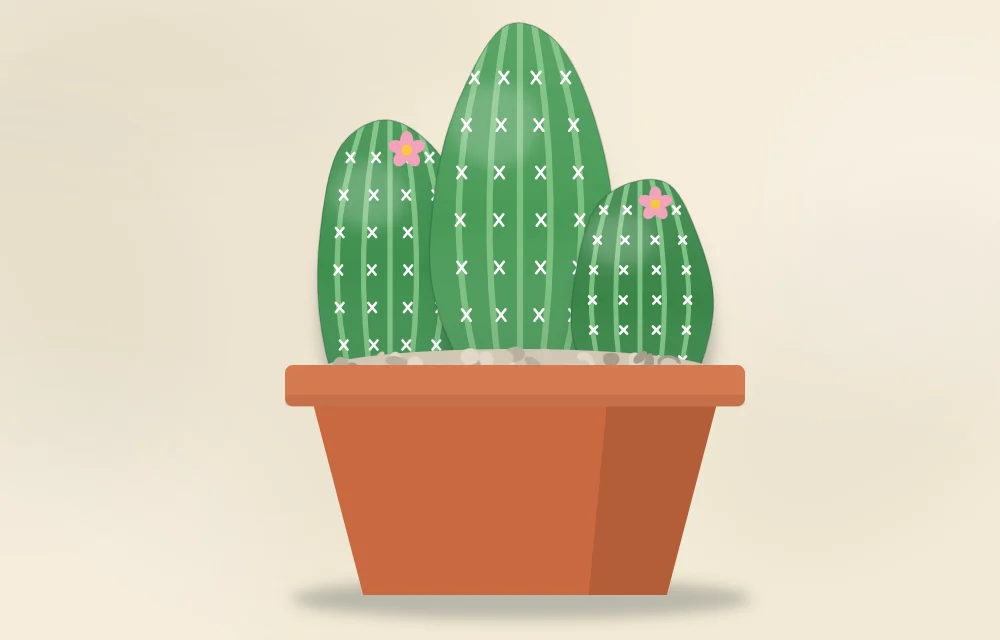
- Place the tallest stone. Push its base down into the gravel toward the back of the pot until about a third of the stone is buried and it stands without help.
- Add the other two. Set the middle-sized stone to one side and the smallest in front, leaning very slightly against its neighbors. Turn each stone so its best side and the flower face forward.
- Top up the gravel. Add a final layer around the bases and press it down with your fingers to lock the stones in place.
Where to keep it
A stone cactus pot is happiest indoors or in a sheltered spot. If you keep it outside, expect the paint to fade, chip or wear over time, since outdoor durability depends on the products, the stone and the conditions. A terracotta pot left out in the rain can also fill with water if its drainage hole is blocked.
Watch out
A pot of stones and gravel is heavy and full of small pieces. Keep it out of reach of small children, since loose stones and gravel are a choking and throwing hazard, and place it where it cannot be knocked off an edge.
A cactus pot also makes a low-maintenance present; there are more ideas in the list of painted rock gifts to make by hand, and more ways to show finished stones in the guide to displaying decorative painted stones at home.
Frequently asked questions
What shape of rock looks most like a cactus?
Tall, narrow ovals look like column cacti and flatter rounded ovals look like paddles. Choose stones with one slightly broader end so they stand upright when that end is pushed into the gravel.
How do I get the cactus rocks to stand up in the pot?
Fill the pot with gravel to about an inch below the rim and push each stone in until roughly a third of it is buried. Then add more gravel around the bases and press it down to hold the stones steady.
Can I put painted cactus rocks in a pot with real plants?
You can, but soil that is watered regularly keeps the base of the stones damp, which is hard on a painted finish. The paint may fade, chip or wear and need touching up, so a dry pot of gravel is the easier option.