Rock Painting Supplies: What You Need to Get Started
A short, practical supply list for rock painting: what to buy now, what can wait, and what paint, paint pens, brushes, dotting tools and sealer each do on a stone.
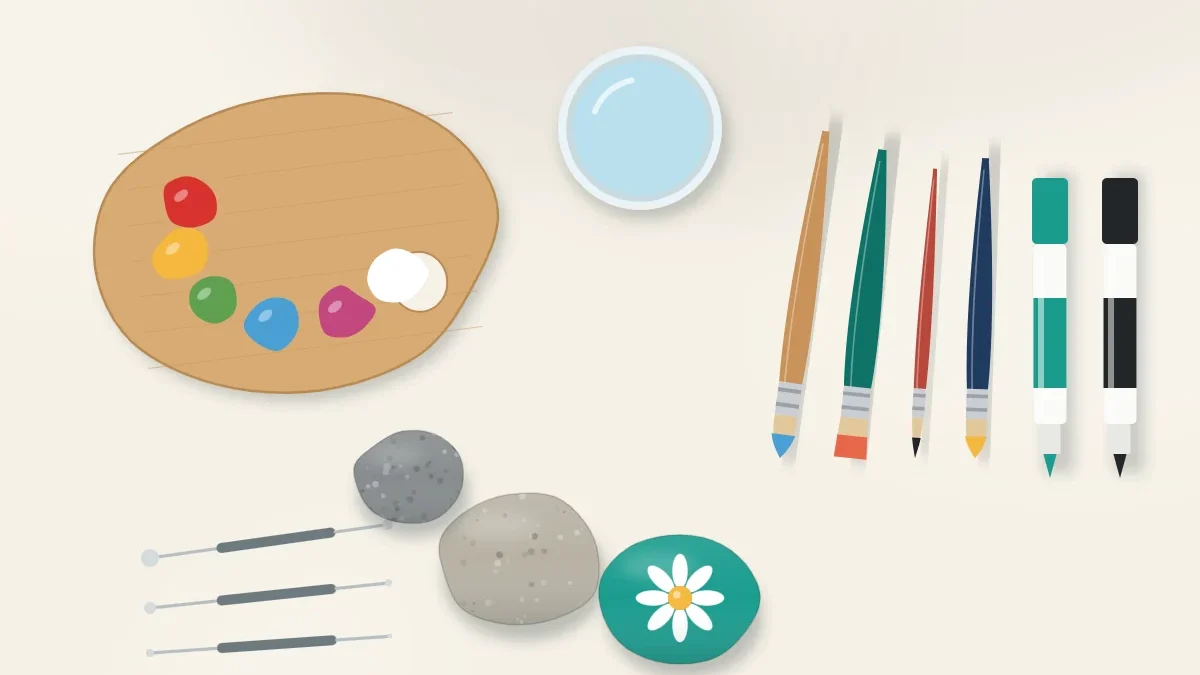
A craft store aisle can make rock painting look like it needs forty products. It needs about six. The rest are useful later, once you know which kinds of designs you enjoy, and buying them early mostly adds clutter to the table.
The list below is split into what to get now and what can wait, with notes on what each item actually does on a stone.
The supply list at a glance
| Item | What it is for | When to get it |
|---|---|---|
| Smooth stones | The painting surface | Now |
| Acrylic craft paint | Base coats, backgrounds and shapes | Now |
| Two or three brushes | Covering large areas and painting details | Now |
| Palette, water jar, cloth | Mixing, rinsing and blotting | Now (household items work) |
| Pencil | Light sketching on the base coat | Now |
| Clear sealer | Protecting the finished surface | Before finishing the first stone |
| Acrylic paint pens | Outlines, lettering and fine details | Later |
| Dotting tools | Even, round dots in graded sizes | Later |
| Masking tape, fine sandpaper | Straight edges and smoothing rough spots | Later |
Paint
Acrylic craft paint is the standard choice for rocks. It is thick enough to cover stone in two coats, dries fairly quickly, and brushes rinse out with water while the paint is still wet. It comes in small bottles, which keeps the cost of a starter palette low.
A practical first set is six colors: white, black, red, yellow, blue and green. White gets used fastest, because it goes into base coats, highlights and every pastel mix, so a larger bottle of white is worth having. Other colors can be mixed from these six: orange from red and yellow, pink from red and white, and softer greens by adding yellow or white. The guide to color planning for rock painting shows how to choose palettes that look good together.

Check the label before buying. It states whether the paint is intended for children’s use, how to clean up, and how long it takes to dry. Finishes vary too: matte paint hides brush marks a little better, while gloss and metallic paints tend to be more see-through and often need an extra coat.
Paint pens
Acrylic paint pens hold liquid paint in a marker body. They are not required, but they make outlines, lettering and small details much easier than a brush does, because the tip is firm and the hand moves as it would with an ordinary pen. Fine tips suit outlines and faces; medium tips fill small shapes.
A black pen and a white pen in a fine tip are the most useful pair to start with. Use them on dry paint only, and press lightly; pumping the tip on the stone itself can release a blob. More on line work is in how to outline painted rocks.
Watch out
Some sealers can make paint pen lines smear or bleed. Test the pen and sealer together on a spare stone first, and follow the manufacturer’s instructions on both labels for drying times and compatibility.
Brushes
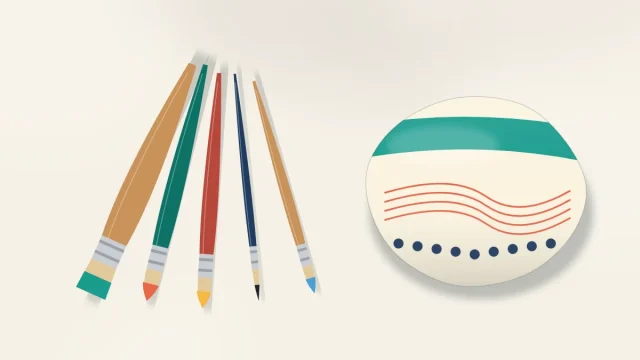
Synthetic bristles hold up better than natural hair on stone, which is slightly abrasive. Three brushes cover nearly everything:
- A flat brush, about 1/2 in (12 mm) wide, for base coats and backgrounds.
- A round brush, size 4 or 6, for shapes such as petals, leaves and bodies.
- A small round or liner brush, size 0 or 1, for outlines, veins and other thin lines.
What each shape does, and how to keep brushes in good condition, is covered in the guide to the best brushes for rock painting.
Dotting tools
Dotting tools are sticks with a small ball or flat tip at the end. Dipped in paint and touched to the stone, they leave a neat round dot, and a set with graded tips gives dots in matching sizes. They are the main tool for dot painting on rocks and radial patterns.
Household stand-ins work well for a first try: the handle end of a brush, a pencil eraser, a cotton swab with the fluff pulled off, a toothpick for the smallest dots and the head of a pin pushed into a pencil eraser. A purpose-made set is worth buying only once dots become a regular part of your designs.
Palette, water and cleanup
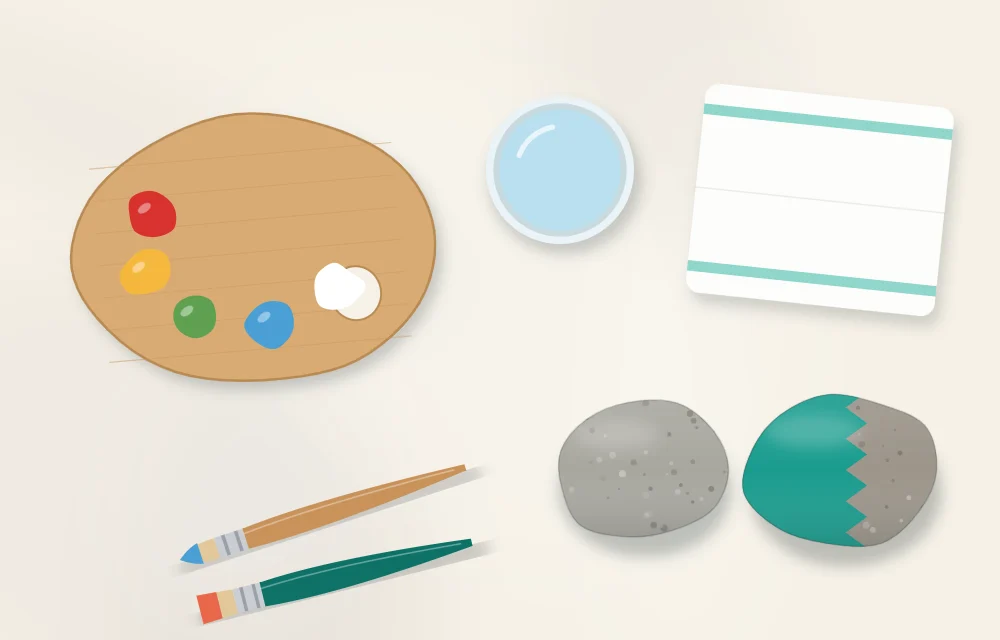
None of this needs to be bought. A ceramic plate, a plastic lid or a sheet of wax paper serves as a palette. A jam jar holds rinse water; a second jar of clean water for thinning paint keeps colors from turning gray. A folded cotton cloth or paper towels are for blotting the brush after rinsing, so extra water does not flood the paint.
Cover the table with scrap paper or a wipe-clean mat and wear old clothes or an apron. Acrylic paint is difficult to remove from fabric once it has dried.
Sealer
A clear sealer goes over the finished, fully dry design to protect it from scuffs and handling. There are two main types:
- Brush-on sealer is applied with a soft, wide brush. It is easy to control and suits indoor work at a table.
- Spray sealer gives a thin, even film without brush marks. Use it outdoors or in a well-ventilated area, as directed on the can. Spray products are a job for adults.
Sealers come in matte, satin and gloss finishes. The label states which surfaces and paints the product suits, how many coats to apply, how long to wait between them and whether it is intended for outdoor use. Painted rocks kept outdoors can still fade, chip or wear over time and may need touching up. The full process is in how to dry and seal painted rocks.
Useful extras
- Masking tape for straight edges and geometric sections.
- Fine sandpaper, around 220 grit, for smoothing small rough spots before painting.
- Reusable putty to hold small stones still.
- A wire rack or bottle caps to raise stones while they dry.
- Cotton swabs for lifting a wet mistake before it sets.
Tip
Start with the “Now” items in the table and paint five or six stones before buying anything else. By then it will be clear whether pens, dotting tools or a wider range of colors would be used the most.
Frequently asked questions
What supplies do I need to start rock painting?
Smooth stones, a few colors of acrylic craft paint, two or three synthetic brushes, a palette, water, a cloth and a pencil are enough to begin. A clear sealer is needed once the first design is finished and dry.
Are paint pens better than brushes for rocks?
They do different jobs. Brushes cover large areas and fill shapes quickly, while paint pens make outlines, lettering and small details easier. Many painters use a brush for the base and shapes, then a pen for the fine lines.
Which sealer should I use on painted rocks?
Brush-on and spray clear sealers both work for many projects, and they come in matte, satin and gloss. Read the label to confirm the product suits your paint and intended use, and follow the manufacturer's instructions for coats and drying times.