How to Dry and Seal Painted Rocks
How to let painted rocks dry properly and apply a clear sealer in thin coats, with the differences between brush-on and spray sealers and matte, satin and gloss finishes.

A painted rock can feel dry and still be soft underneath. Sealing it at that point is the most common reason a finished design ends up cloudy, tacky or smeared. Drying and sealing are two separate jobs, and the first has to be properly finished before the second begins.
This guide explains the general process: how to let paint dry evenly, how to choose between brush-on and spray clear sealers, how to apply thin coats, and what a sealer can and cannot be expected to do. Exact times and coat counts belong to the product you buy, so the label on your paint and your sealer always has the final word.
Touch-dry is not the same as fully cured
Acrylic craft paint dries from the outside in. The surface forms a skin first, which is why a stone can feel dry under a light fingertip while the paint below is still giving up moisture. That first stage is called touch-dry. The later stage, when the whole film has hardened, is usually described as fully dry or cured.
How long each stage takes depends on the paint, how thickly it went on, how many layers there are, the stone itself and the temperature and humidity of the room. Thick blobs, such as raised dots, take much longer than a thin flat coat. Because of all those variables, no single number fits every rock. Read the drying and recoat information on your paint, and when in doubt, give it longer.
| Stage | What it looks and feels like | What you can do |
|---|---|---|
| Wet | Shiny, cool, moves when touched | Leave it alone or blend colors on purpose |
| Touch-dry | Looks matte or even in sheen, does not transfer to a fingertip | Add the next layer of paint gently |
| Fully dry or cured | Hard all the way through, raised dots do not dent under light pressure | Seal, following the timing on the product label |
How to dry painted rocks evenly
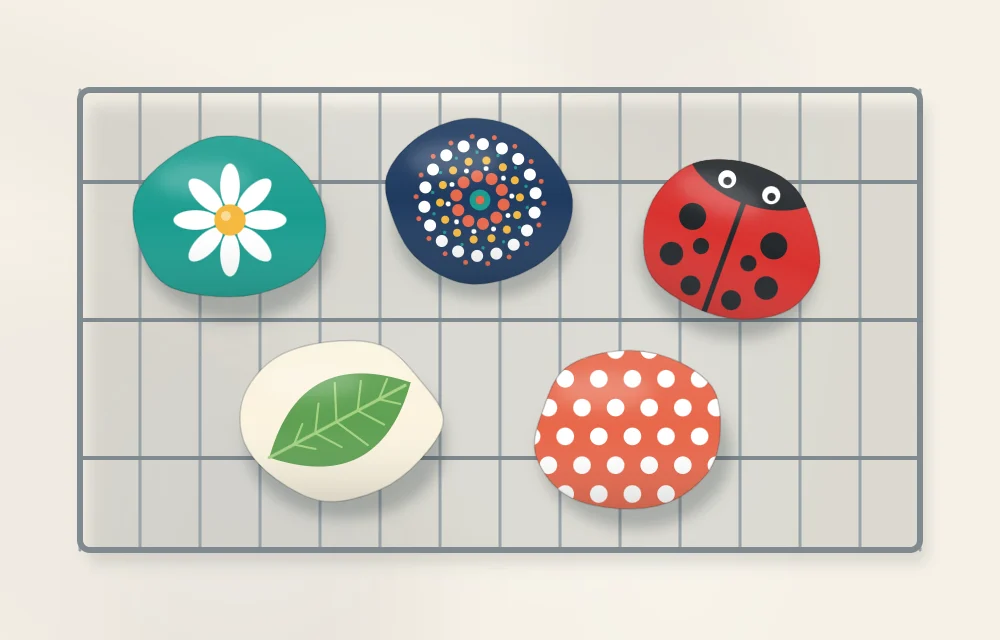
Air needs to reach the paint. A stone sitting flat on newspaper dries on top while the lower edge stays damp and sticks to the paper. Rest finished stones on a wire rack, on an upturned jar lid, or on a few bottle caps so the painted edge is off the table.
- Paint the top and sides first, let them dry, then turn the stone and paint the underside if you want it covered.
- Dry stones indoors at normal room temperature, away from dust, pets and curious small hands.
- Avoid forcing the paint dry with strong heat. Fast surface drying can leave the paint below soft, and it can cause cracks in thick areas.
- Check raised dots last. Press very lightly on one near the edge; if it dents, the stone is not ready.
Thin, well-dried layers make this stage much shorter and more predictable. If the paint on your stones tends to stay soft, the guide to layering paint on rocks explains how to build color with thin coats.
What a clear sealer does
A clear sealer is a see-through coating that goes over dry paint. It adds a layer between the design and the things that wear it down, such as handling, rubbing against other stones and dust. It also evens out the surface sheen, so areas painted with different colors or with paint pens look the same.
What it does beyond that depends entirely on the product. Some clear sealers are made for indoor craft projects only, and others are labeled for outdoor use. Do not assume. Check the label for where the product can be used, what surfaces and paints it suits, and how to care for the finished piece. Even with a sealer labeled for outdoor use, painted rocks kept outside can fade, chip or wear over time and may need touching up or resealing.
Brush-on or spray sealer
| Brush-on clear sealer | Spray clear sealer | |
|---|---|---|
| How it goes on | Brushed over the surface with a wide, soft brush | Misted over the surface from a distance in light passes |
| Good for | A few stones, working at a table, careful control | Batches of stones, textured or heavily dotted designs |
| Main risk | Brush strokes, pooling, and dragging paint that is not fully dry | Drips from heavy passes, uneven coverage, fumes and overspray |
| Where to use it | As directed on the label | Outdoors or in a very well-ventilated area, as directed on the label |
Either type usually comes in several finishes. Matte has no shine and gives a soft, natural look. Satin has a gentle sheen. Gloss is shiny, deepens dark colors and makes dot patterns look glassy, but it also shows brush marks and dust more clearly. The finish is a matter of taste, so choose the one that suits the design.
Applying sealer in thin coats
- Test on a spare rock first. Paint a scrap stone with the same paints and pens you used, let it dry fully, and seal it. Some sealers can make certain paint pens or inks bleed or smear, and a test is the only reliable way to find out before it happens on a finished piece.
- Set up the space. Protect the table, raise the stones on a rack or caps, and make sure there is fresh air. Follow the ventilation and safety directions on the label, especially for spray products.
- Apply one thin coat. With a brush-on sealer, load a soft, wide brush lightly and lay the sealer down in one direction without scrubbing back and forth. With a spray, use light passes from the distance the label gives, moving past the stone at each end of the pass.
- Let it dry as the label directs. Do not touch or stack the stones while the coat is drying.
- Add further coats if the label recommends them. Several thin coats give a clearer, more even finish than one heavy coat, which can turn milky, wrinkle or stay tacky.
- Turn and seal the underside. Once the top is dry, flip the stone and repeat on the base if it is painted.
Watch out
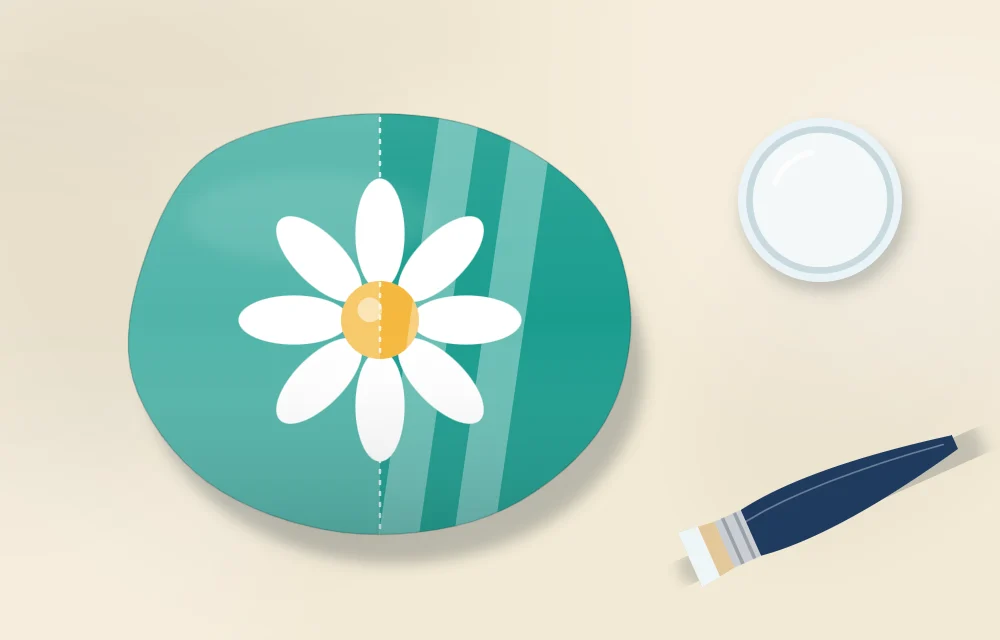
Sealers, and spray sealers in particular, are a job for adults. Work with good ventilation, keep children and pets away from the area, and follow every safety, storage and cleanup instruction on the product label.
Common sealing problems
- Cloudy or milky finish. Usually the coat was too thick, the paint below was not fully dry, or the air was damp. Thin coats and patience are the cure for the next stone.
- Smeared lines. The sealer reacted with a pen or ink, or the brush dragged soft paint. Test first, and use a very light touch on the first coat.
- Tacky surface. The coat may need more time, or it went on too heavily. Leave the stone in a dry room with air moving around it and check the label for guidance.
- Visible brush strokes. Use a softer brush, less product, and strokes in a single direction.
Several of these overlap with other common rock painting mistakes, and most trace back to rushing the drying stage.
After sealing
Sealed rocks are still decorative objects. They are not toys for small children, and they should not go in aquariums or touch food. If you plan to use them outside, for example as painted rock garden markers, choose products labeled for that use and expect to refresh them now and then. For indoor pieces, a soft dry cloth is enough to keep them clean; there are more ideas in the guide to displaying decorative painted stones at home.
Frequently asked questions
How long should painted rocks dry before sealing?
It depends on the paint, how thick the layers are and the room conditions, so there is no single answer. Follow the drying information on your paint label and the recoat guidance on your sealer. When unsure, wait longer, because sealing over soft paint can cause smears and cloudiness.
Is brush-on or spray sealer better for painted rocks?
Both can work. Brush-on sealer gives control and suits a few stones at a table, while spray sealer covers batches and textured dot designs without touching the surface. Spray products need outdoor or very well-ventilated use and adult handling, as the label directs.
Can sealed painted rocks stay outside?
Only if the products you used are labeled for outdoor use, and even then results vary with the product, the stone and the conditions. Painted rocks kept outdoors can fade, chip or wear and may need touching up. Check local rules and get permission before leaving rocks anywhere that is not your own property.